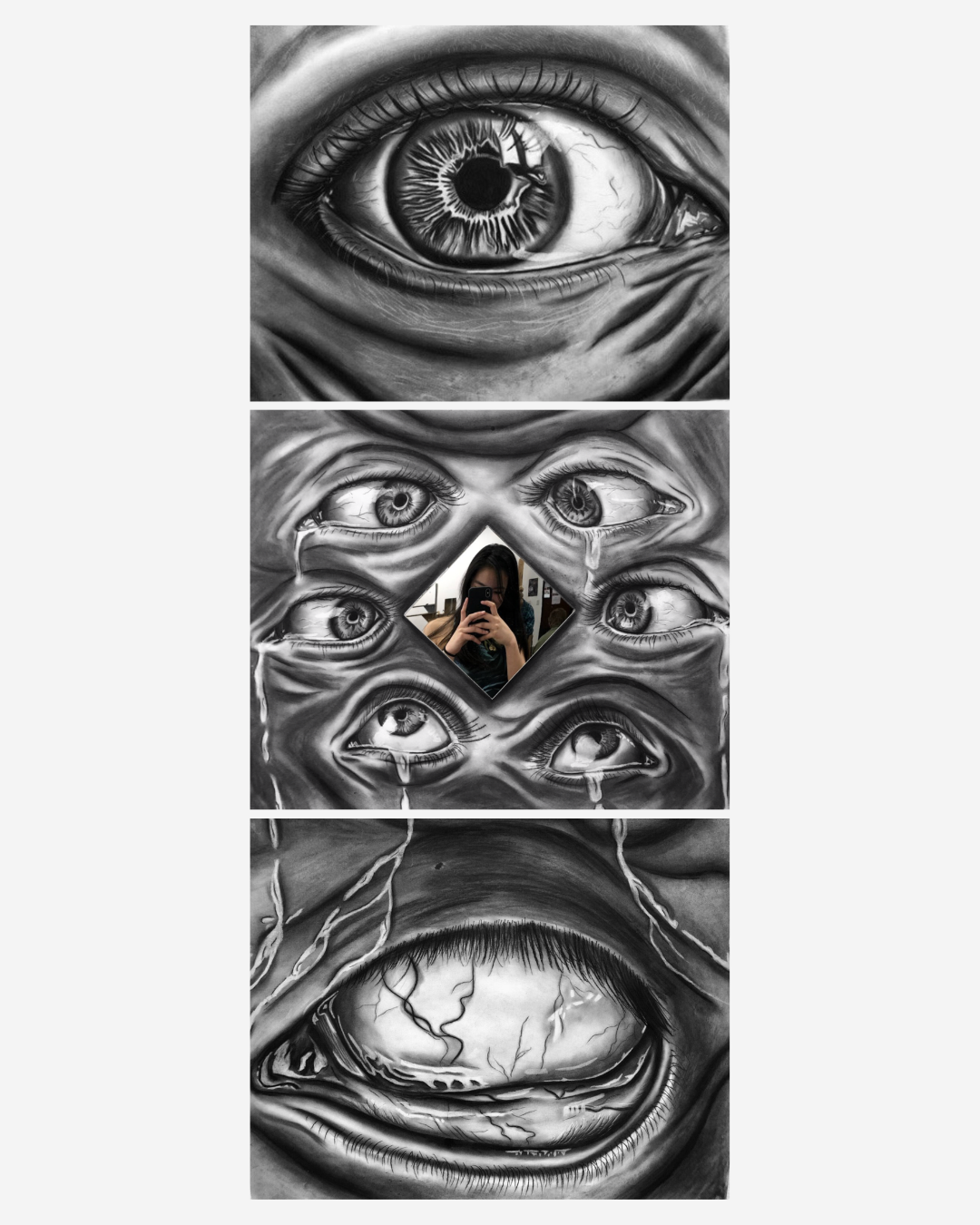
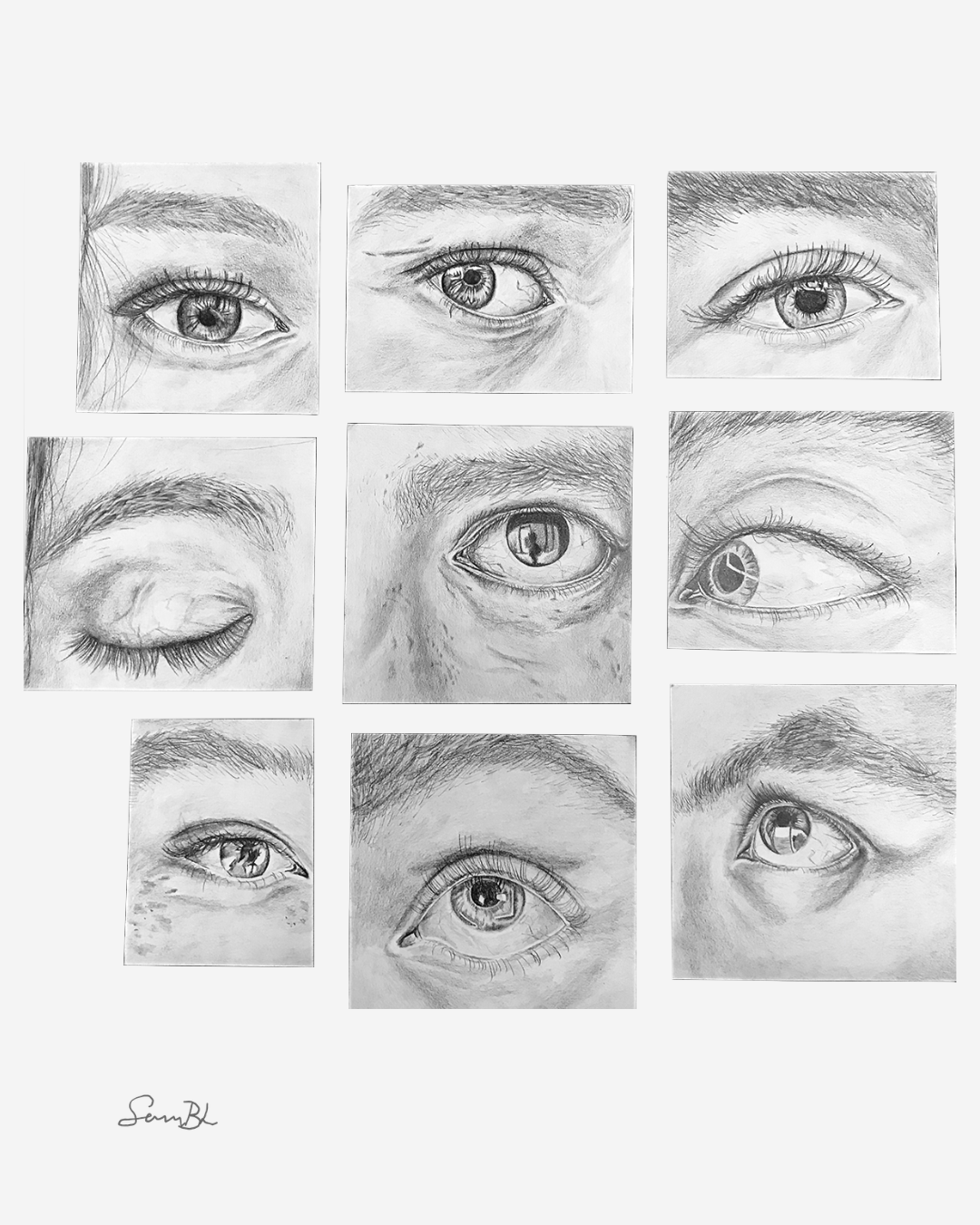
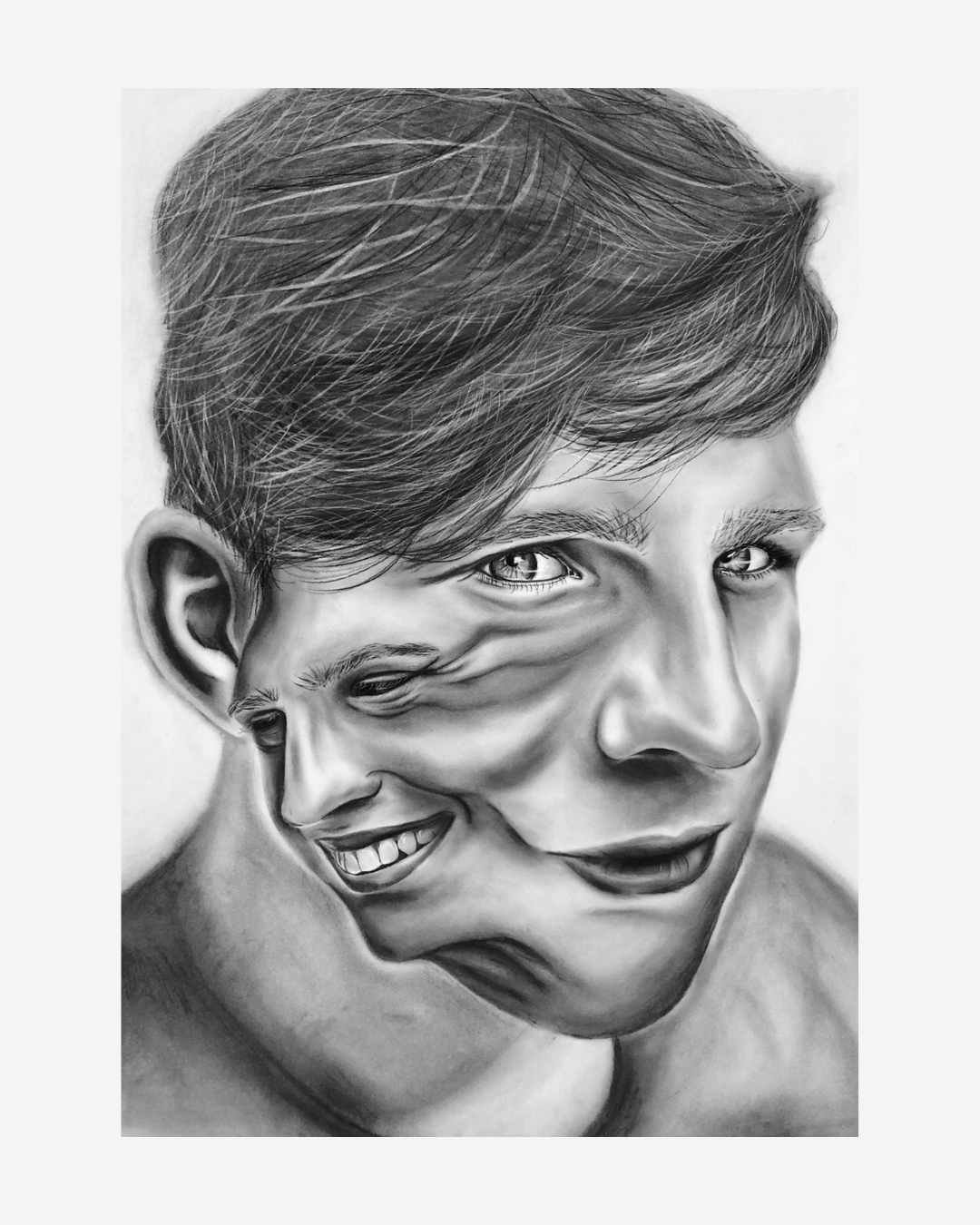
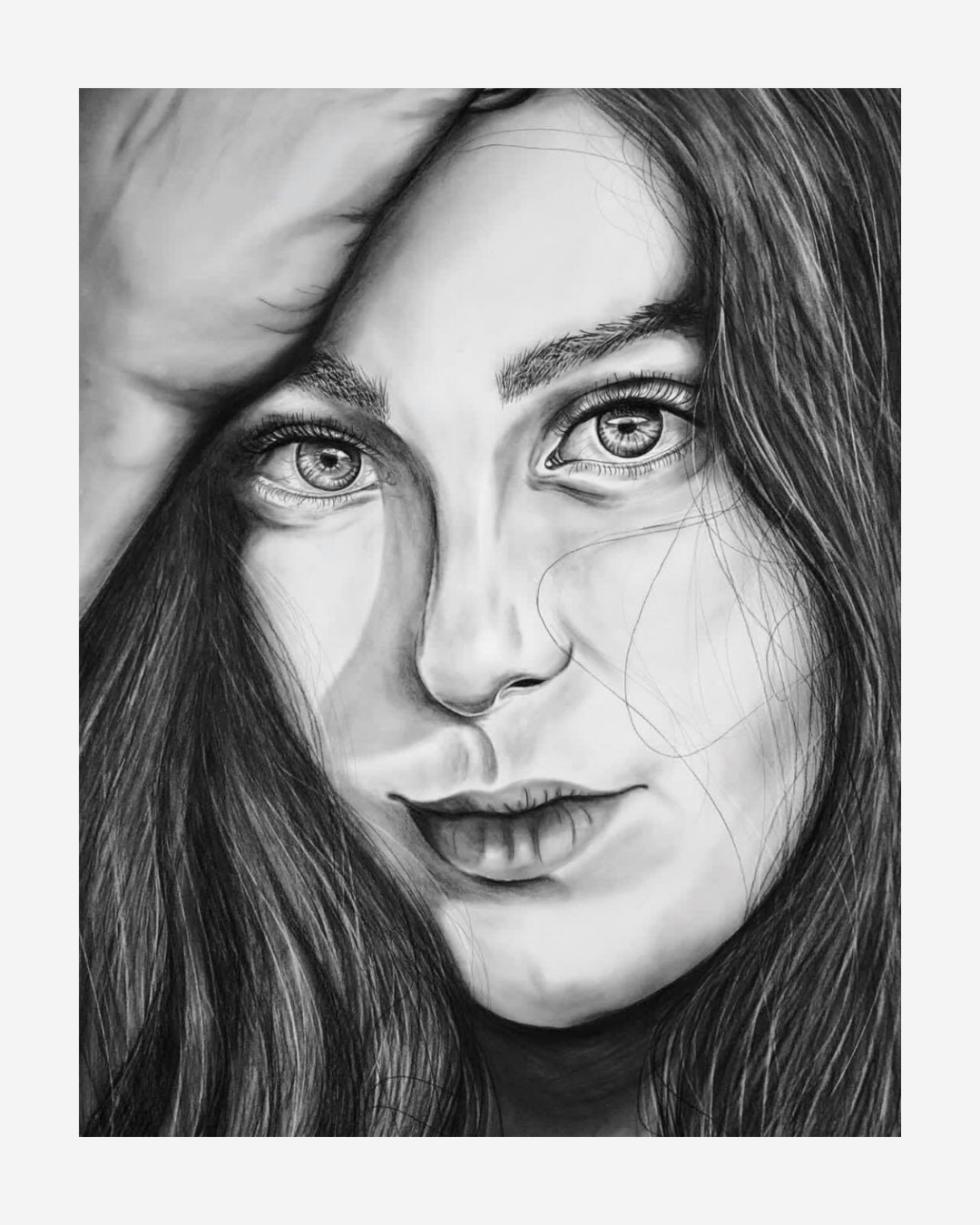
Dear Society began with a nightmare. I had a vivid dream about a strange, many-eyed blob, and although the image initially had no particular meaning, I couldn't stop thinking about it. During an elective at USC’s Roski School of Art and Design, those eyes eventually became the visual language through which I explored my relationship with societal expectations.
Growing up, I often struggled with the feeling that acceptance could be conditional. Expressions of care could sometimes arrive alongside suggestions of who I should be: how I should look, what I should value, what success should resemble, and which parts of myself might need to change in order to become a more acceptable version of me. The eyes became a way of giving that pressure a physical presence.
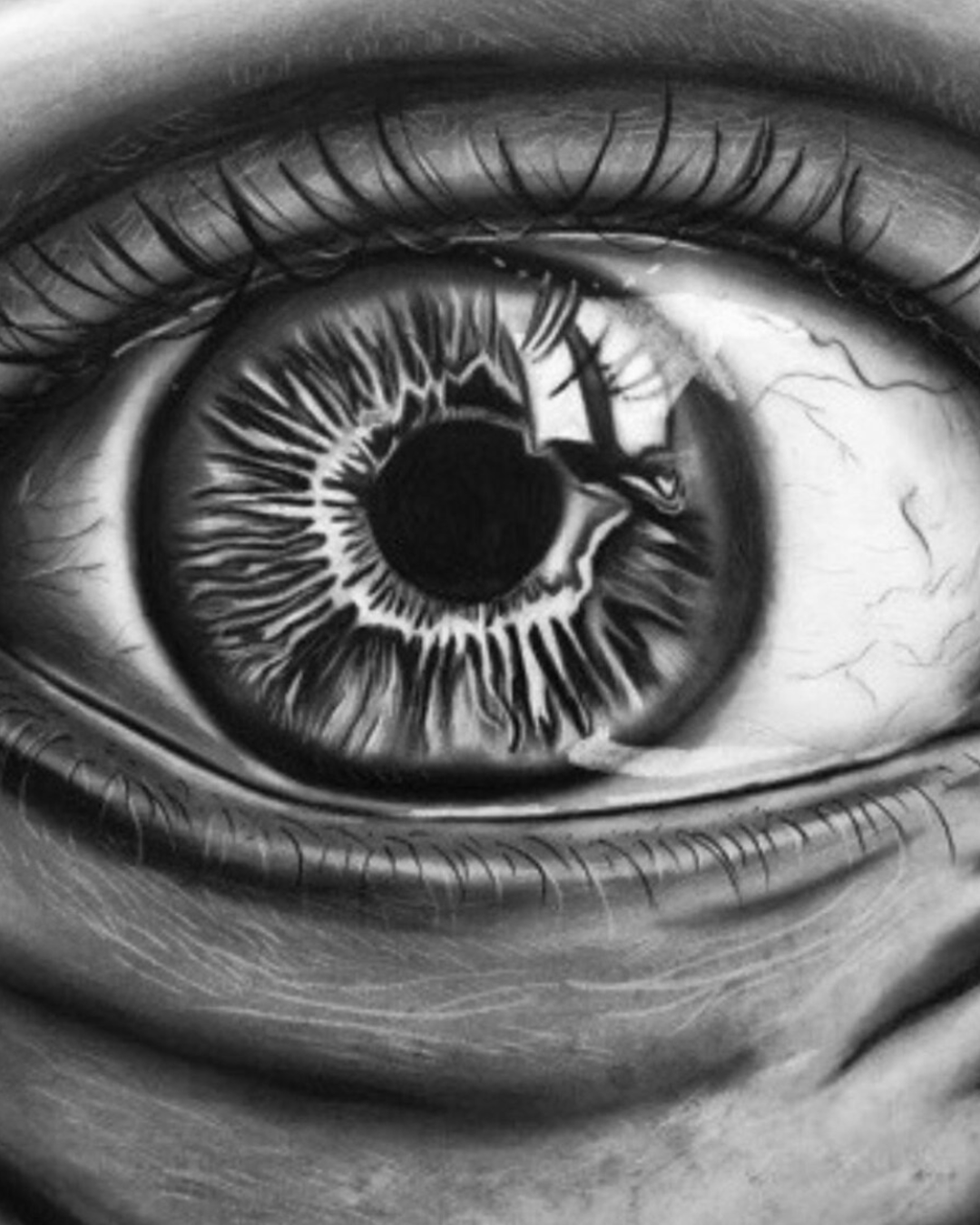
The first panel contains a single, bold charcoal eye. Unlike the eyes that follow, it holds its gaze. For me, it represents awareness, resilience, and an emerging sense of self-worth—the part of the self that remains capable of looking back when it is being scrutinized.
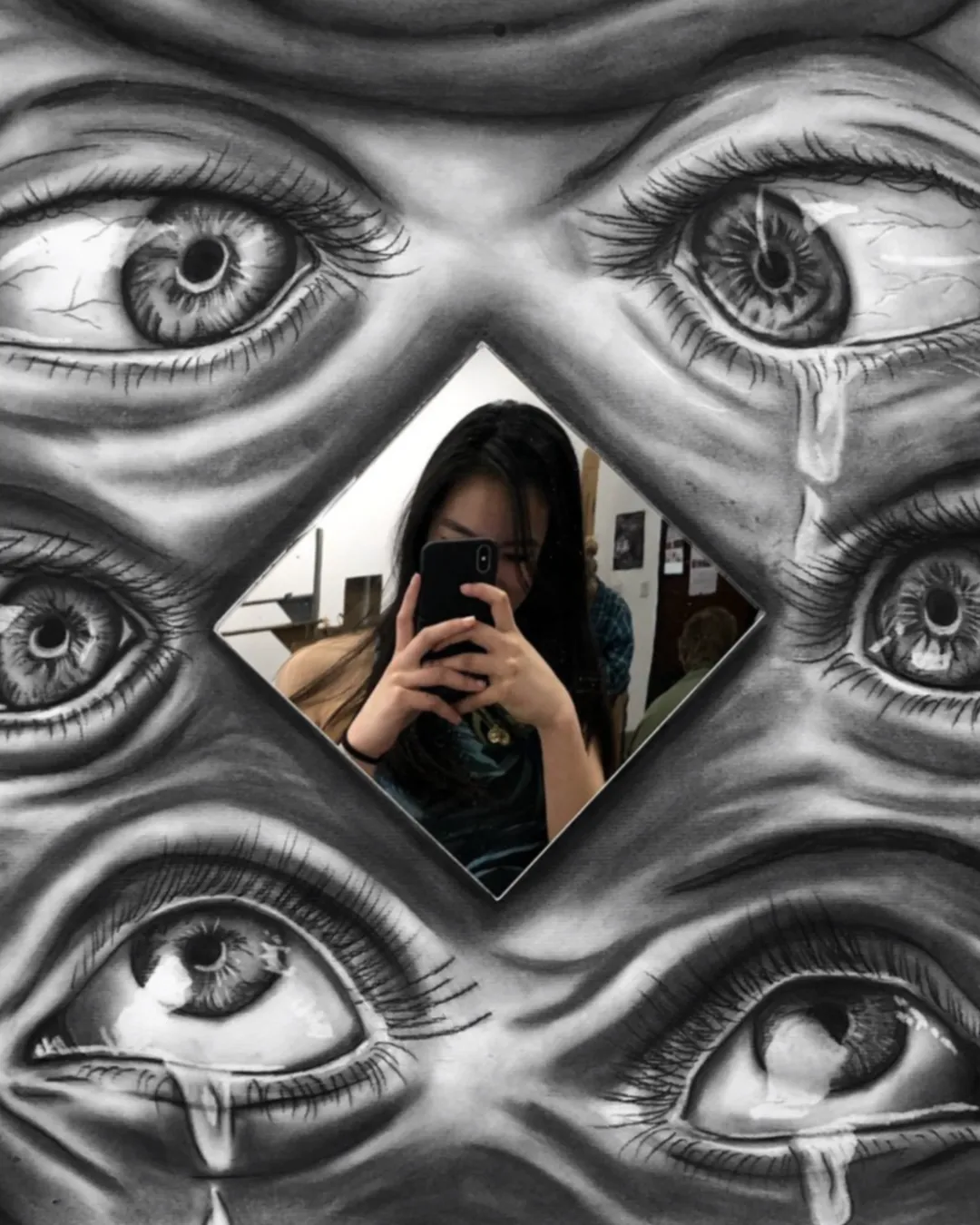
The second panel turns that scrutiny outward. Weeping eyes surround a mirror, so when someone approaches the work, their own reflection becomes part of it. The viewer is simultaneously looking and being looked at. I wanted the crying eyes to complicate the idea of society as a singular antagonist: the people enforcing expectations are often living beneath those same expectations themselves.
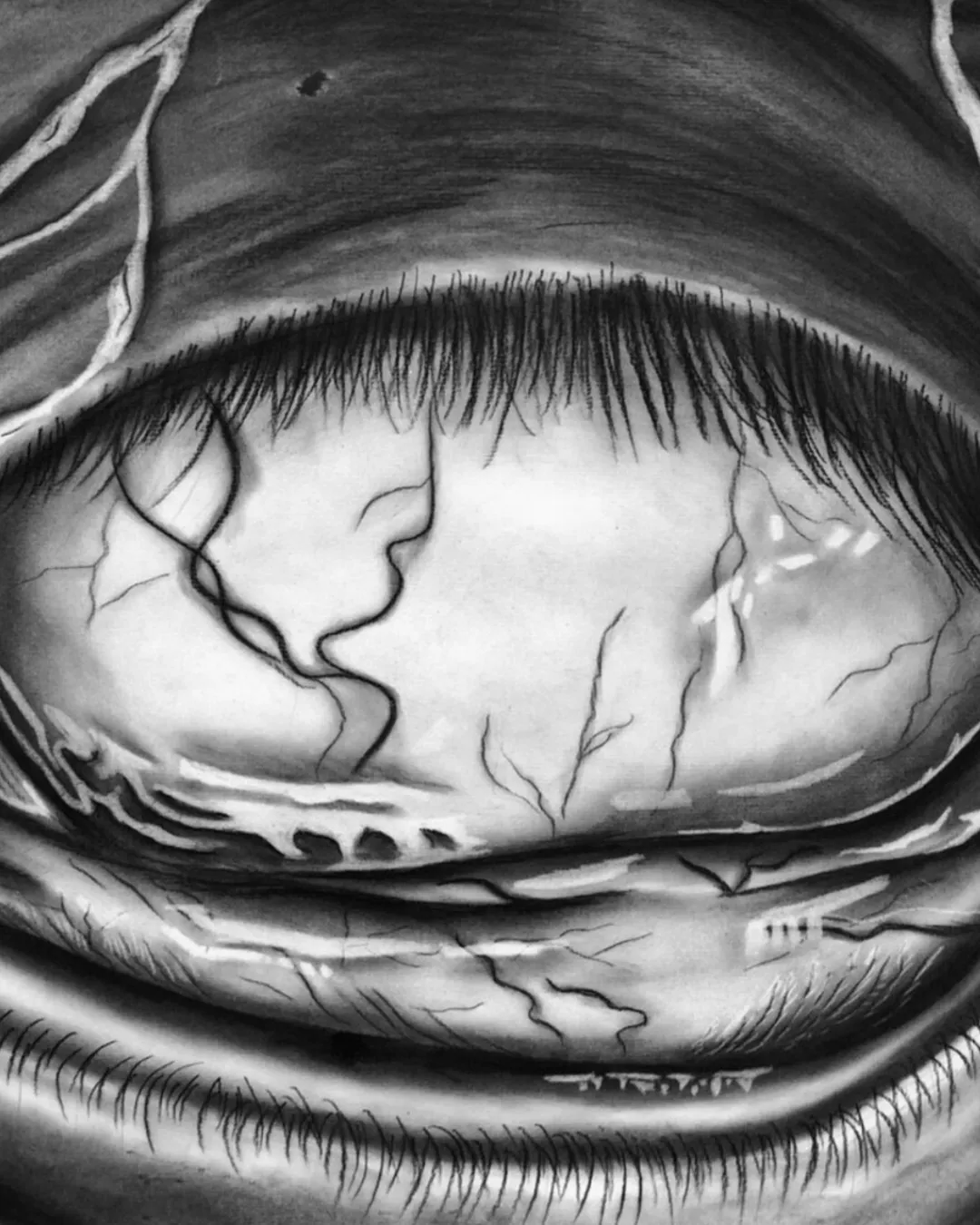
The final panel depicts an eye rolled backward, representing the numbness that can come from conformity. There can be comfort and acceptance in becoming what is expected of us, but that acceptance can also require distancing ourselves from parts of who we are. Eyes continue across the boundaries of the three panels, physically connecting them while the gaps interrupt their forms. I think of those shared eyes as my own place within society: I am part of the structures I am questioning, even when I feel ideologically distant from them.