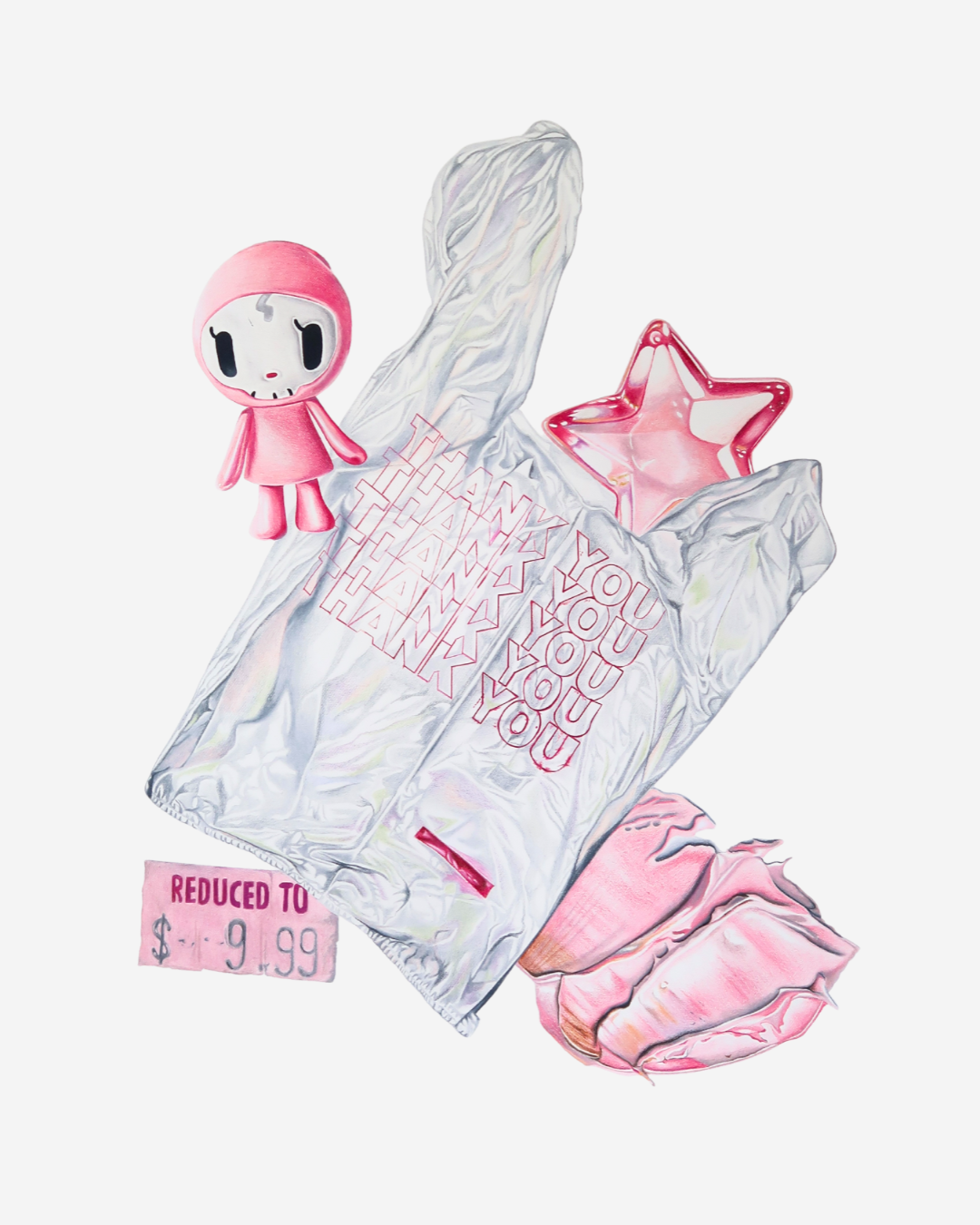
Identity Theft asks a seemingly simple question: does what we consume become part of who we are?
A plastic “Thank You” bag points plainly to consumerism and the things we buy, while the objects around it complicate that relationship. The Tokidoki Ciao Ciao figure has sat on my windowsill since middle school, more than a decade ago, and I still collect Tokidoki today. The jelly star and cute sticker reflect an aesthetic I now gravitate toward, despite having hated the color pink as a child. These objects raise questions about continuity: do the things we have loved for years reveal something inherent about us, or have they simply participated in constructing who we have become?
The “REDUCED TO $9.99” sticker takes this idea literally, asking what happens when we reduce ourselves to what we consume. Algorithms increasingly learn our preferences and feed them back to us, blurring the distinction between discovering what we like and being told what we should like. Are these recommendations reflecting an identity that already exists, or quietly helping to manufacture one?
Even the paint becomes part of the question. I create, and I call myself an artist, but does what I do define who I am? Rather than separating identity from consumption, Identity Theft sits within the uncertainty between them: what we buy, what we keep, what we make, what we are shown, and what we choose to call ourselves.
.webp)
.webp)
.webp)

personal.png)
personal.png)